Showing posts with label Martin Luther King Jr. Show all posts

Friday, February 8, 2019

The Anisfield-Wolf Book Award 2018 Seminar at CWRU


"Over the years, the Anisfield-Wolf canon 
has become a living, breathing community 
of thinkers, writers, and artists 
that spans continents, generations, 
and intellectual traditions."

Rev. Dr. Stephen Rowan
______________________________
______________________________


How do we talk about racism? How do we talk about sexism? These were two of the questions that initiated the 2018 Anisfield-Wolf Book Award seminar at Case Western Reserve University. Following the seminar approach to general education, these questions would be answered through guided instruction and moderation from August to December. The goal was not only to help facilitate talk about racism and sexism but also to study the ways in which this talk already occurs. The challenge presented to students was to analyze and deconstruct the grammar and rhetoric of white supremacy. What are the images created and repeated? How are sentences structured to lead readers or listeners to certain conclusions? What are the nouns, verbs, adverbs, and adjectives which act as dog whistles for attentive audiences? All this and more were on the table when we began our seminar.


The thesis of the 2018 seminar was that the Anisfield-Wolf Book Award winners could help answer the questions posed on racism and sexism. We began the semester with the Book Award winners in preparation for attending the Award Event in late September. In those weeks, students considered how the poetry of Shane McCrae taught readers how language bends and twists in order to reflect the tension between hate and love, captor and captive, identity and society. Next, the students weighed the importance of truth and hoax through Kevin Young's Bunk: The Rise of Hoaxes, Humbug, Plagiarists, Phonies, Post-Facts, and Fake News. Bunk seriously engages what it means to be a "non-fiction" book in eras where various authors and authorities try to blur the line between fact and fiction, especially as it applies to the construction, exploitation, and oppression of racial identities. The fiction award winner, Sing Unburied Sing, written by Jesmyn Ward, demonstrates for students the ways that fiction can be used to speak of unspeakable traumas  and to embodied truths that are too often left dismissively abstract. Concluding this section with the majority of the class attending the Book Award Event was critical to bringing the texts alive in new ways by introducing the book's readers to the book's writers. Returning back to class, the following months were evidently impacted by the way that this event grounded the discussion of racism and sexism within real lives and social conditions.

______________________________


______________________________


Beyond the 2018 Book Award Winners, the seminar invited the class to read important Anisfield-Wolf texts that take different perspectives on the questions and language of racism. Books by the Reverend Doctor Martin Luther King, Jr. and Malcolm X began the analysis of the Civil Rights Movement, a scope which we expanded to consider the women of the civil rights movement as well. Books like Hidden Figures and the Gay Revolution filled in this picture in part, as well as additional texts that resonated with the Anisfield-Wolf mission, such as This Bridge Called My Back, Sister Outsider, and the writings of Angela Davis. These women writers gave insights into the ways that women were hard at work in the Civil Rights Movement as well as the distinct ways sexism was compounded and furthered with the racist rhetoric of white supremacy. Indeed, by adding the lens of gender, the reading of MLK and Malcolm X deepens by prompting audiences to consider how being heterosexual cisgender men of faith may have influenced the way in which these leaders encountered the world. This synergy not only expanded but also added dimensions to familiar view points on the Civil Rights Movement.


Towards the end of the semester, the training and texts of the Anisfield-Wold Awarded books were brought to task against literature that reflects or considers traditions of white supremacy. Guided by critical films and texts, the students engaged in their own independent research on specific white supremacy organizations around the United States. After presentations were made, in which the ideologies, cultural touch-stones, and grammar of the white supremacists were analyzed, the class proceeded to find ways that the Anisfield-Wolf Award books and their affiliates help to resist and dismantle these rhetorics of hate. Specifically, students rode the rails around Cleveland in order to see the murals based on Anisfield-Wolf Award Books which decorated the windows of the train cars. This mural project was generated through a partnership with Inter | Urban, the Cleveland Foundation, and the Anisfield-Wolf SAGES Fellows at Case Western Reserve University. Together, the students studied specific images by artists inspired by particular A-W Book Award winning books and articulated how they saw the art combatting or deconstructing the grammar of racism and sexism.

______________________________

______________________________

As a scholar and instructor of Anisfield-Wolf Awarded Books, I am honored to introduce students at Case Western Reserve University to the canon of books that each attempt in their own way to respond to the questions: how do we talk about racism, and, how do we talk about sexism? In the last couple years, the class has been in high demand with spots filling up quickly and there always being an extensive wait-list. On the first day, I hear about what brings the students to the seminar and to Anisfield-Wolf Book Award archive. Some students come with already invested interests in social justice, racial equity, and feminism. Other students come to the class admitting that they come from homes and local areas were racism and sexism is rampant but discussing either is discouraged. In each case, I take my job seriously: to meet students where they are, equipping them with critical tools and books, and to help bring them into the ongoing discourse which the Anisfield-Wolf Book Awards has promoted. By the end of the semester, I hear a myriad of ways that the students now feel not only better trained to engage these conversations and activisms but also feel connected to a wider community which these books have generated. For these reasons and more, I am grateful to see these students and the A-W community grow one year and one seminar at a time.


______________________________

______________________________

Friday, January 29, 2016

"Indispensable" A Sermon by the Reverend Rachel J Bahr


"The members of the body that seem to be 
weaker are indispensable"

I. Corinthians 12:22
_________________________
_________________________

“For just as the body is one and has many members, and all the members of the body, though many, are one body, so it is with Christ.” Amen to that. In any group, no matter how seemingly homogenous there is diversity and fault lines ready to rip own chasms that have been building up pressure for years. Yet however temperamental, anyone who has a family knows a truth, whether one you were born into or chosen later in life, the truth that it is in our differences that we are strong. It is because we have feet, those who will do the legwork, that me make progress in the world. It is because we have hands, those who will offer welcome, embrace and support, that we survive. It is because we have eyes, diverse gifts of perception that allow us to see the world, see secrets, see new truths.

In the scripture of our family, in the passion of our faults, in the testament of our differences, in the commandments of our love we see us how God sees us: as one body with many members. My family knows something about difference within unity. My partner sometimes describes our family in this way, she is a goldilocks surrounded by a family of bears. The truth is the Bahr women are fiercely independent; we enjoy our autonomy within the Bahr kin-dom, adults and bear cubs each wanting to direct the path in our own ways. “Indeed,” scripture tells us, “the body does not consist of one member but of many.”

Clementine is like a pair of hands, she is known for staking claim on people, things, and new territory, like a bear. Once I found she moved all of her belongings into my bedroom, in an attempt to colonize. Things didn’t explicitly have Mom written on them was her explanation. She believes in claiming things. Once she marks you, you are a part of her territory, and she is fiercely protective. She looks out for her own, often behaves like a little mom, to her sister’s annoyance. But the hand she lays on things is of love, she wants to keep you secure & close.

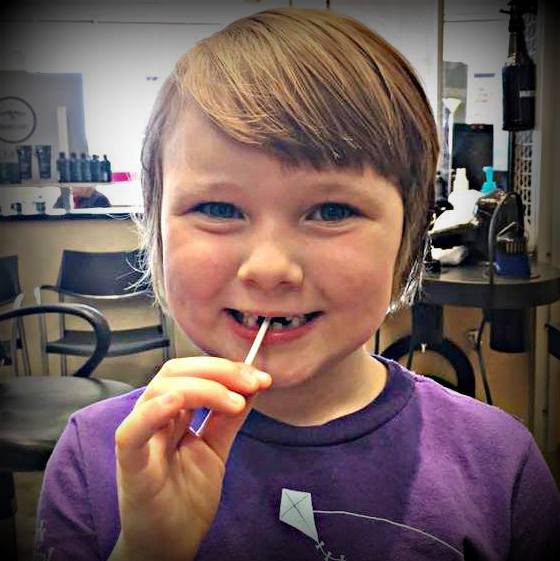
Nora is like a pair of feet. Since she was old enough to crawl to me, upon coming home she always demanded to engage in play before we could do anything else. Nora’s games often involve the adult running themselves ragged, while she sits and laughs, expending little energy. Don’t leave anything out or it becomes a material in her world to smear on the walls. She’s a kid who enjoys all things messy. She likes seeing things move, people, things, thoughts, feelings. She is a kid that wants to set the world into motion, to take static things, the neat and organized, and fill them with a spirit of action.

Having gifted girls often means there is competition when one is praised. The other speaks up, “What about me?” Fearing that raising up one will bring down the others. Many of us fear this I think. But scripture like a mama bear says, “if the ear would say, "Because I am not an eye, I do not belong to the body," that would not make it any less a part of the body.” You are not any less part of the family for being different. Although sometimes, when each bear wants her way it can feel like that.

In our family, Gabby, the Three Bears' Goldilocks, often knows how to bring us all together. She is a unique pair of eyes. She reminds us that we need one another, especially when we all are demanding things go our own ways. She reminds the den: “The eye cannot say to the hand, "I have no need of you," nor again the head to the feet, "I have no need of you." On the contrary, the members of the body that seem to be weaker are indispensable.” She helps each of us, including me, see fault lines as scars on the road to healing, to see hope and wholeness in the worst of divisions, to see the old in new ways.

_________________________


The Reverend and the Doctor
_________________________

Our scripture today is all about seeing the old in new ways. In seeing the scripture in our family, in the passion of our faults, in the testament of our differences, in the commandments of our love, all saying that we are one body with many members.

But as many of us know, it is our family and even our bodies that challenge us most. In our scripture today, Jesus was visiting his hometown and synagogue. Do some of you know what its like to go away for a time and then come back to the church where you grew up? How many of you came back to the church a new person with a new vision. As long as Jesus followed the “usual” customs he was going to be safe.

But what does Jesus do? He reads from the book of the prophet Isaiah, words familiar to those listening but shows it to them with new vision. “The Spirit of the Lord is upon me, because he has anointed me to bring good news to the poor. He has sent me to proclaim release to the captives and recovery of sight to the blind, to let the oppressed go free, to proclaim the year of the Lord's favor.” The year of God’s favor was called the year of Jubilee. Every 50th year Jews were called to forgiveness and liberation. All debts were released, the poor were to be emancipated from slavery, all prisoners were to be released, and even physical impairments would be healed. Jesus reads Isaiah for a reason. Isaiah’s prophetic words foretell what will happen when the anointed one would come, the Messiah, the one who would restore Israel to God’s Vision.

Jesus finishes reading and says to them, “Today this scripture has been fulfilled in your hearing.” Folks just stare at him, wondering what this all means. He likely received blank stares. Some of you may know what this feels like, when you return home, to see family, to an old church and you are saying things that shake things up and people are clearly uncomfortable.

Jesus is challenging the status-quo, the forces that maintain that some folks have more worth or value than others. Jesus is challenging who’s in and who’s out, in his own hometown. Jesus is communicating God’s Vision of Wholeness. We’re not leaving anyone out! We will live out being open and affirming!

This revolution Jesus is calling for, is one that he knows folks will run from, it terrifies them, and yet he begins in his hometown. Where he had the greatest potential for criticism, and folks questioning his identity. Jesus is coming out to them, saying things he’s never said to them before, laying it out on the table. People who know us, who knew us from our youth, are the hardest to come out to. Because they want to keep you as they knew you. As safe, domesticated, if sometimes troubled children. They want to keep what they knew rather than turning to face the strange. This was Jesus’ challenge sharing the good news, the radical welcome laid out in God’s Vision, how could he share this good news without rejection? How do we challenge people to welcome the rejected? And this is what the people do to Christ. They run him out of town. They take Christ literally out of their lives. How do we respond?

How do we see ourselves as Christ sees us without domesticating ourselves, without falling back on divisions in order to give us the feeling of safety?


_________________________


Clementine
_________________________


This last week we celebrated Martin Luther King Jr, a man who knew something about the dangerous promise of seeing us as Christ sees us, seeing how in the scripture of our family, in the passion of our faults, in the testament of our differences, in the commandments of our love God calls down with radical inclusivity that we are one body with many members.

In the famous “Letter from a Birmingham Jail” the Rev. Dr. Martin Luther King, Jr writes about his disappointment with the domesticated white moderate saying:

(1)“who is more devoted to "order" than to justice; who prefers a negative peace which is the absence of tension to a positive peace which is the presence of justice… who… believes he can set the timetable for another man's freedom; who lives by a mythical concept of time and who constantly advises [the oppressed] to wait for a ‘more convenient season.’”

Some would say that hiring a queer pastor, enacting serious support for transgender persons is too much too quick. Some would beg us to wait, slow down, so we can hold onto our hate or fear a little bit longer. But this holding on to hate is what Christ and Martin Luther King Jr. says is killing us, killing black and queer and trans youth in the streets or alone in despair, and is killing us all spiritually. Waiting can be a sensible compromise, and radicalness can go too far, but we cannot wait to affirm life and we cannot go too far in the work of love. Love, as the late David Bowie tells us, challenges us to care for those on the edge of the night and in so loving to care for ourselves. It is never too soon to see the ignored, it is never too much to heal the wounded, there is no peace without justice, especially when we see ourselves in the isolated, suffering, and devalued. It is never beyond Christianity to see as Christ sees.

Dr. King continues: 2) “There was a time when the church was very powerful. It was during that period that the early Christians rejoiced when they were deemed worthy to suffer for what they believed. In those days the church was not merely a thermometer that recorded the ideas and principles of popular opinion; it was the thermostat that transformed the mores of society. Wherever the early Christians entered a town the power structure got disturbed and immediately sought to convict them for being "disturbers of the peace."

At youth at General Synod this past summer our young people, some from this congregation attended a UCC Polity and History class with the Rev. Dr. Jeremiah Wright, who with Rev. Bernice Jackson spoke about the civil rights movement, and other movements such as the Occupy Movement and the Black Lives Matter Movement as all having a common thread. They were begun by young adults who were tired of standing by, doing nothing to make society change. They reminded us if you don’t have a mortgage it’s much easier to join the movement, you’re more willing to take risks for your own or another’s liberation.

The revered Dr. King continues his argument: 3) “Things are different now. The contemporary church is so often a weak, ineffectual voice with an uncertain sound. It is so often the arch supporter of the status quo. Far from being disturbed by the presence of the church, the power structure of the average community is consoled by the church's often vocal sanction of things as they are.”

We have the impulse to turn away from MLK’s honest critiques, embarrassed that now over 50 years later, his message is still relevant, that Christ’s call two millennia later is still desperately needed, that in the scripture of family, the passion of our faults, in the testament of our differences, in the commandments of our love, we still need help to see ourselves as God sees us: as one body with many members. But in closing I say for us all: “the members of the body that seem to be weaker are indispensable.” We are not unchristian for our brokenness and divisions for it is ever by Christ through those that the Church is continually resurrected. There is hope. We are the Church of the poor. We are the Church of resurrection. And Hope is always with us. Amen.


_________________________


Nora
_________________________

_________________________


The family reading together
_________________________